As a conjunctive adverb, however is used to join two independent clauses to form a compound sentence. An independent clause is a clause that could stand alone as a complete sentence. The "however" introduces a contrast or opposition between two independent clauses. However is a conjunctive adverb, not a coordinating conjunction . Remember that an adverb modifies a verb, and the word conjunction implies that it's bringing two separate ideas together. A conjunctive adverb must use a semicolon to connect two independent clauses, NOT just a comma.

Learn to distinguish conjunctive adverbs from subordinating conjunctions; they do not function in the same way. Conjunctive adverbs should be used to begin independent clauses, not to join them. However is often implicated in comma splices, which are also mentioned in the final bullet point of my post on semicolons; that post has further information on punctuating around however when it joins two independent clauses . Enclosed by commas it underlines what precedes it, often with contrast. Without either it points to the contrast without emphasis; this lets you avoid unnecessary punctuation where no ambiguity is likely to arise. Unlike the coordinating conjunction "but," "however" is not used to link two independent clauses in a single sentence.

As such, if you want to use it to contrast two points, you need to make sure they are both complete sentences. A conjunctive adverb modifies the action by creating logical connections in meaning between independent clauses. Unlike conjunctions, conjunctive adverbs are not always at the beginning of the clause. A common problem writers face is the incorrect usage of conjunctive adverbs. Many times it is because they confuse them with coordinating conjunctions. Punctuation and grammar rules state that two independent clauses connected with a conjunctive adverb cannot be joined with only a comma.

The semicolon is strong enough to hold them together, and the full stop of the period is powerful enough to break the clauses apart. The adverb "however" means "to whatever extent or degree". It's typically used in sentences to merge two independent clauses to make a single, compound sentence. The term could be used in the middle of a sentence, with or without punctuation. A compound sentence with "however" contains at least two independent clauses.

These two independent clauses can be combined with a comma and a coordinating conjunction or with a semicolon. All of these examples create comma splices because there are complete sentences to the left and the right of the conjunctive adverbs however, therefore, and moreover. The commas after "growth," "hunger," and "poet" create the comma splices.

Here is the correct way to punctuate these sentences. When a conjunctive adverb connects two independent clauses in one sentence, it is preceded by a semicolon and followed by a comma. You put a semicolon before other conjunctive adverbs when they connect main clauses too. For example, you'd put a semicolon before the words "consequently," "moreover," "nevertheless," "still," and "therefore" in similar sentences. However also can be used in the middle of a compound sentence. When used in this fashion, it serves as a conjunctive adverb that connects two independent clauses.

Of course, you can also place however mid-sentence to create desired emphasis, as we saw in examples c and d above. Just be sure that if you use a pair of commas, however isn't separating independent clauses, which would require a semicolon and comma. Possibly, the only similarity between "but" and "and" is the punctuation usage.

Both do not have commas after them, and they also usually have just a comma right before when merging two independent clauses instead of a semicolon, unlike "however". The grammatical term for a joining word is conjunction. Conjunctions refer to those words in the English language such as and or but or since or because that allow us to build more complex sentences out of simpler ones.

The conjunctions and and but are called coordinating conjunctions; the conjunctions since and because are called subordinating conjunctions. When these words join two independent clauses they are known as adverbial conjuncts because they are adverbs acting as conjunctions. It's purely an adverb that can do conjunction duties when the need arises or when two independent clauses are a bit too loaded or complex for traditional conjunctions like "but" and "and" to glue or shoulder. When two independent clauses come together to make a compound sentence, "however" is used with a semicolon (;) before it and a comma right after. A compound-complex sentence with "however" contains at least two independent clauses and at least one dependent clause.
Most of the time, problems occur when the writer uses a conjunctive adverb in the middle of a sentence when a coordinating conjunction is actually needed. But remember that conjunctive adverbs can be used in any part of a sentence. Put a comma after however if you're using it as a conjunctive adverb to introduce a contrast, and it is followed by an independent clause . Though some writers rebel against this rule and surround their conjunctive adverbs with commas, most still prefer the significant pause the semicolon or period offers.

Independent clauses are those that can each stand alone as a complete sentence. The second is Then he chased a squirrel through the park. A comma is used after the first independent clause except in cases where the two independent clauses are very short, and there's no chance of confusion, such as He jumps high and runs fast.

The grammatical term for a group of words that can stand on its own as a complete sentence is independent clause. To be an independent clause, the group of words must contain both a subject and a verb. In the independent clause I completed my essay, I is the subject, and completed is the verb. Since each of these is used as a coordinating conjunction, you'll still need to punctuate your sentences correctly.
Still, it's a good idea to have a range of conjunctions ready, so you don't always use "however" to introduce contrasting points. Mind your commas and semicolons, and don't use any punctuation after "however" when you use it to mean "in whatever manner," "to whatever extent," or "no matter how." I did a bit of research and found that not everyone agrees on when to call it a conjunction and when to call it an adverb. Some references would call "however" in your example a conjunction, some an adverb, and some a conjunctive adverb.

My post was mostly based on the examples in Merriam-Webster and their entries for "however" as a conjunction and an adverb, but note that Lexico dictionary doesn't even have an entry for "however" as a conjunction! A complex sentence with "however" contains at least one independent clause and at least one dependent clause. Dependent clauses can refer to the subject the sequence/time , or the causal elements of the independent clause.

The word however in English can be a challenge to use correctly. In its primary usage, when used as a conjunctive adverb, the word "however" indicates a sudden change in thought. It signals the reader that the statement coming after the word "however" will be a contradiction or modification of the statement that appears before the word. When used this way, the word "however" is typically preceded by a semicolon or a period and immediately followed by a comma.

We use 'although' and 'despite / in spite of' to connect two clauses in the same sentence. On the other hand, 'however' isn't used to connect two clauses. Instead, we usually put the two ideas in two separate sentences. We put 'however' in the second sentence, and we can put it at the beginning, at the end, or after the subject.I love London. When joining two independent clauses with a conjunction, place a comma before the conjunction.

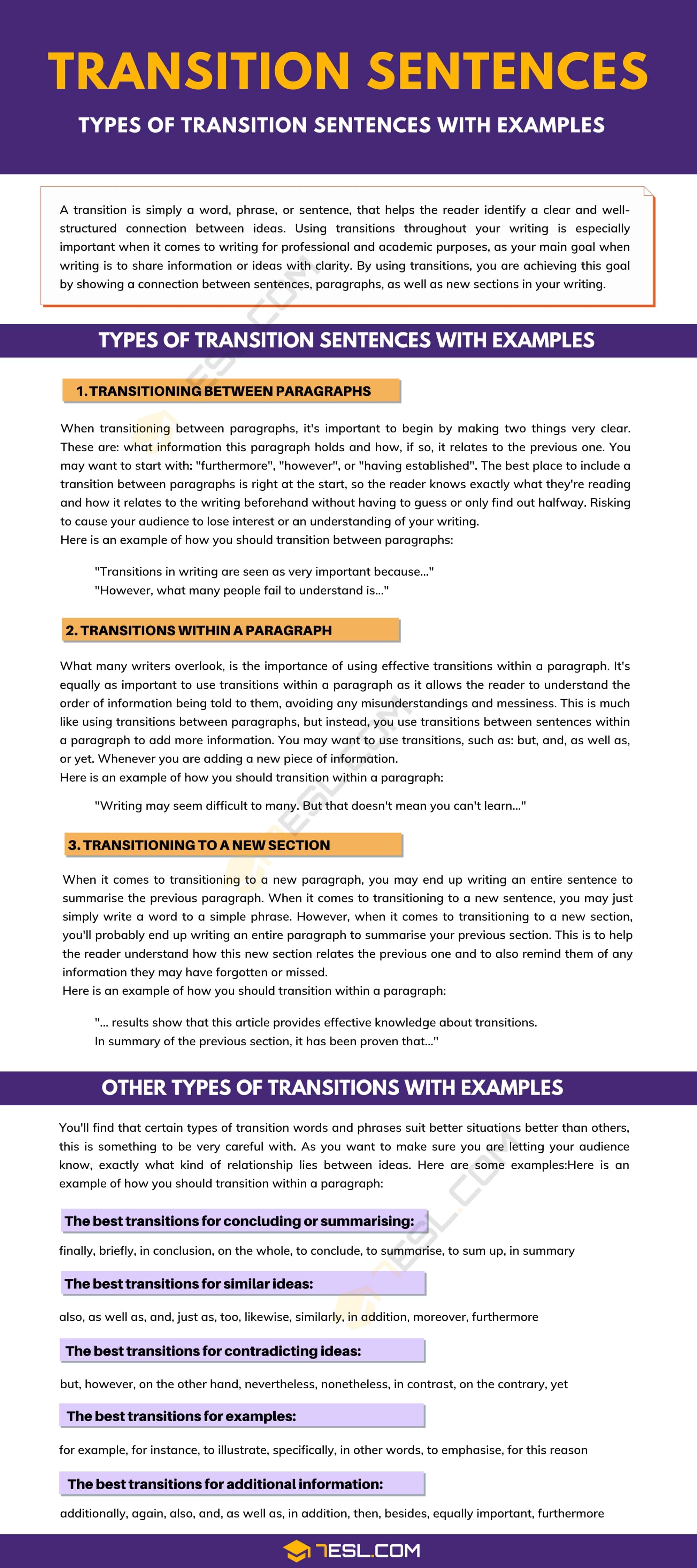
Conjunctions include the words "and," "but," "or," "nor," and "yet." When we join two clauses in a sentence with however meaning 'nevertheless', 'but' or 'yet', the rules state it should be preceded by a semicolon and followed by a comma. The grammatical reason is that however is an adverbial conjunct , not a conjunction. Other words in this category include moreover, therefore and furthermore. There are two basic types of transitions, conjunctive adverbs and conjunctions. Transition words and phrases are used to clarify the relationships between sentences.

Transitions can be divided into groups according to their functions. But "however" does exhibit a relationship between two clauses as more rhetorical or semantic than grammatical. But when "however" is not used as a "conjunction" or doesn't link two independent clauses, it has no preceding semicolon. A simple sentence with "however" contains a subject and a verb, and it may also have an object and modifiers. In the incorrect example, the reader may at first think the customer ate the pie and the waitress.

In the correct example, the comma before the conjunction tells the reader, "Stop, another independent clause with its own subject is about to begin." Use commas to set off a nonrestrictive clause in the middle of a sentence, but not to set off a restrictive clause. Nonrestrictive clauses tell you something about the subject of a sentence, but they do not limit, or restrict, the meaning. Restrictive clauses, on the other hand, limit the possible meaning of the subject. These join clauses that are not equivalent grammatical structures.

Subordinating conjunctions introduce dependent clauses. These clauses cannot stand by themselves but must be joined to a main or independent clause. Finally, the correct sentence comes with a semi-colon before "however" and a comma after. The semi-colon breaks up the two connected clauses to help with understanding. "However" stands alone as a coordinating conjunction, meaning a comma needs to come directly after it before the new clause makes sense. It's easy to write fragment sentences when you start them with, "However." If a sentence begins, "However, …" it needs to be followed by an independent clause!
Check all your sentences that contain it to make sure they are complete. The word however in English typically is used as a conjunctive adverb, indicating a turn of events or a sudden change in thought. When used this way, the word "however" typically is preceded by a semicolon or a period, and it is immediately followed by a comma. The last example is not correct because "thus" cannot join two independent clauses. Conjunctive adverbs are always used with a semi-colon in front of them and a comma after them. When you use however as a conjunctive adverb, be cautious about placing it at the end of a sentence or clause – especially a long one – where it delays the signal of contrast and can take the oomph out of whatever precedes it.

Placed at the beginning it can also reduce emphasis, by making your reader wait for the subject, however momentarily. In example a, however means "in whatever way," but in b it means "nevertheless." What distinguishes the meanings is the comma after however in example b. Apparently, Strunk and White worried that young writers would include or omit the comma incorrectly, creating an ambiguous however—hence the prohibition.

Under the prohibition, when you mean "nevertheless," you must move however into the sentence and set it off with commas. Here, examples c and d follow the rule against beginning with however, and example e breaks it. Even though the word "however" can mean the same as "but," they are grammatically different.

"However" is a conjunctive adverb (like "therefore," "consequently," and "nevertheless"), and it is used to link the ideas either side of it. "But" is a coordinating conjunction (like "and," "or" and "yet"), and it is used to join the like-for-like elements either side of it. We use "however" in the middle of a sentence when it is linking two clauses together. If the two clauses are closely related, "however" is used as a coordinating conjunction and often separated by commas or semi-colons to fit in the flow of the sentence.

If you want to avoid starting a sentence with "however," it's not hard to do—just grab a semicolon and use it to connect your two main clauses. What I mean is that instead of putting a period at the end of the sentence before the "however," put a semicolon there instead. However is also an adverb in this case, and it is used to show contrast or opposing ideas. The difference is in the placement of the word, which also affects its strength. In these next two positions, however is not directly following one idea and preceding the next, so as you can guess, it's not as strong of a contrast. However in these positions is also known as a nonessential adverb or a parenthetical adverb.

It is not essential or as important to the meaning of the sentence. The idea is that you could remove however without it affecting the meaning of the rest of the sentence that much. However is one in a long list of words that students have been admonished to avoid placing at the beginning of a sentence . You should make your own judgment about such use and let your ear guide you regarding its appropriateness. Place commas inside, not outside, quotation marks. Follow this practice whether or not the comma is part of the original quotation.

When using commas to separate items in a list, place a comma before the conjunction that precedes the last separate item in the list, unless that last item is a compound term. Many people are taught not to place a comma before a conjunction preceding the last item in a list (such as, "red, white and blue"). However, while popular, this approach runs the risk of creating ambiguity in a number of situations.

Here are four straightforward ways to solve the comma splice problem. Understand the subtle differences between them, and make sure you don't get into the habit of always solving your comma splice problems in the same way. Look at each comma splice in your writing as an opportunity to gain mastery over the tools for building complex sentences out of simpler ones. A comma splice occurs when you use a comma to join two complete sentences without placing an appropriate joining word between them.

The comma just isn't strong enough to do the job of making one grammatical sentence out of two. Learn to recognize what comma splices look like, and be sure to avoid them in your essays. A compound-complex sentence hastwoor moreindependent clauseand at least onedependent clause.

How To Use However In A Sentence Example In other words, they are missing either subjects or verbs and don't tell the reader a complete thought. Many amateur writers use the word however incorrectly. The most common mistake—and we see it way too often—is using it as if it were a coordinating conjunction.


No comments:
Post a Comment
Note: Only a member of this blog may post a comment.